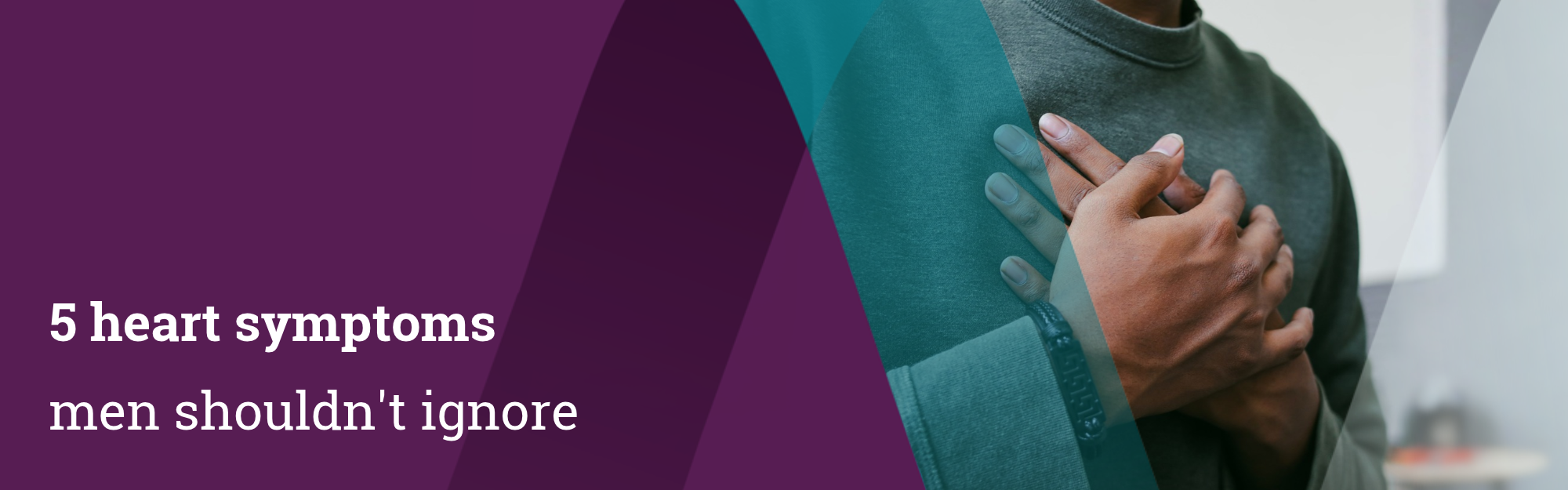
During Men’s Health Awareness Month, it is a good time to focus on one of the most important aspects of men’s wellbeing: heart health. Heart conditions do not always begin with severe chest pain. A subtle reduction in fitness, new breathlessness or a racing heartbeat may be your body’s early signal that something needs checking.
In this article, Dr Michael Michail, Consultant Cardiologist at New Victoria Hospital, explains five heart symptoms men should not ignore, why they are often dismissed and when it is sensible to seek medical advice. With specialist expertise in diagnosing and managing a broad range of heart conditions, Dr Michail outlines how recognising a change early can help men access appropriate assessment, reassurance and treatment where needed.
Man, listen to your heart!
Men are often used to carrying on through discomfort, putting symptoms down to stress, age, work or a lack of fitness. But delaying medical advice can mean overlooking symptoms that deserve proper assessment. More than eight million people in the UK are living with cardiovascular disease, with a slightly higher prevalence among men. With one in eight men dying from coronary heart disease, it is the second biggest killer of men in the country.
Here are five symptoms worth paying attention to, particularly if they are new, getting worse, or happening during exercise:
1. Your fitness isn't what it used to be
A change in fitness can be surprisingly easy to dismiss. Perhaps the stairs feel harder than they did six months ago. You are slowing down when running or cycling, need to stop on a hill you previously managed easily, or simply cannot exercise at the same level anymore.
There are plenty of innocent explanations. We get older, fitness changes, weight fluctuates, and busy periods can mean less exercise. But an unexplained decline in what you can physically do can sometimes be an early sign of a heart problem.
Coronary artery disease, heart valve disease, problems with the heart muscle and abnormal heart rhythms can all affect exercise capacity. Heart conditions such as heart failure, for example, can cause people to become more breathless than expected during physical activity or unusually tired with exertion.
“One of the questions I often ask is not simply whether someone has chest pain, but whether they can still do what they could six or twelve months ago. A change in exercise capacity can sometimes tell us more than people realise.” Dr Michael Michail, MBBS, BSc(Hons), MRCP, PhD
The important thing is the change from what is normal for you. You do not have to be particularly athletic to notice that your usual walk, gym session, bike ride or round of golf suddenly feels harder.
If you notice a persistent or progressive decline, a cardiology assessment at New Victoria Hospital can help investigate the cause and provide reassurance or treatment where needed.
2. Chest pain or discomfort
Chest pain is one of the better recognised symptoms of heart disease, but people do not always describe heart-related symptoms as "pain".
Angina may feel more like pressure, heaviness, tightness or squeezing across the chest. Sometimes discomfort spreads into the arm, shoulder, neck or jaw. One pattern that is particularly important is discomfort brought on by physical activity and improving with rest.
Of course, not every pain in the chest comes from the heart. Muscular pain, indigestion and other causes are extremely common. The nature of the symptoms and someone's underlying cardiovascular risk help determine whether further investigation is needed.
New or severe chest discomfort that does not settle – particularly if accompanied by sweating, nausea or significant breathlessness – should be treated as an emergency and assessed through 999.
3. Breathlessness or tightness
Breathlessness is another symptom that is easy to put down to getting older or being less fit. Being out of breath after strenuous exercise is normal. Becoming unusually breathless doing something that would previously have been comfortable is different.
Heart problems can cause breathlessness for several reasons. Coronary artery disease may limit the blood supply to the heart during exercise. Heart valve disease can affect how efficiently blood moves through the heart, while problems with the heart muscle or heart rhythm can also reduce exercise capacity.
Sometimes the change happens gradually. You start taking the lift rather than the stairs, walk a little more slowly or stop more often without really noticing why.
If your breathing has clearly changed from what is normal for you, particularly during exercise, it is worth getting checked.
4. Palpitations
Palpitations can feel like the heart is racing, pounding, fluttering or missing beats.
They are very common and in many people are harmless. Caffeine, alcohol, stress, poor sleep and exercise can all make us more aware of our heartbeat.
Palpitations are more likely to need investigation if they are new, frequent, lasting for longer periods or occurring during exercise.
They are particularly important if they happen alongside chest discomfort, unusual breathlessness, significant dizziness or a blackout.
An ECG is often a useful starting point. As abnormal rhythms can come and go, a longer period of heart rhythm monitoring may sometimes be needed to establish what is happening when symptoms occur.
5. Dizziness, near-blackouts or blackouts
Feeling briefly light-headed after standing up quickly is common and is usually not a sign of heart disease. More significant unexplained dizziness, feeling as though you are about to pass out, or actually losing consciousness deserves more attention.
There are many possible causes of a blackout. Occasionally it can be due to an abnormal heart rhythm or a problem affecting the heart's ability to pump blood effectively.
A blackout during exercise is particularly important. NHS guidance advises calling 999 if someone faints while exercising. Episodes that happen without warning, while lying down, or alongside palpitations or chest discomfort also warrant prompt medical assessment.
When should you get checked?
None of these symptoms automatically means there is something wrong with your heart. Many people investigated for chest pain, breathlessness or palpitations ultimately have reassuring results. What often matters is whether something has changed.
Symptoms that are new, persistent, getting worse or consistently occurring during exercise are worth discussing with a doctor. It is also sensible to have a lower threshold for seeking advice if you have cardiovascular risk factors such as high blood pressure, high cholesterol, diabetes, smoking or a strong family history of heart disease at a young age.
A cardiology assessment does not necessarily mean having lots of tests. It starts with understanding the symptoms, your general health, and your individual risk. Depending on the problem, investigations might include an ECG, echocardiogram, heart rhythm monitoring or cardiac imaging.
New Victoria Hospital’s Cardiac Diagnostic Service
New Victoria Hospital’s Cardiac Diagnostic Service offers a range of investigations to help clarify the cause of cardiac symptoms. In some cases, this may include a stress echocardiogram or, when clinically appropriate, further assessment such as an angiogram.
Modern heart investigations mean that significant problems can often be ruled out without invasive procedures. Equally, they can identify people who would benefit from treatment before their symptoms become more limiting.
Make your heart health a priority
This Men’s Health Awareness Month, consider making one commitment to your heart health: book a blood pressure check, ask about cholesterol, stop smoking, return to regular activity, or seek advice about a symptom you have been putting off. You do not need to be certain that there is a serious problem before asking for help. If something feels different, persistent or is affecting what you can do, it is worth having a conversation.
For a specialist assessment of cardiac symptoms or concerns about your heart health, please book an appointment with Cardiology Consultants at New Victoria Hospital.
To find out more about Dr Michael Michail and his clinics, please call 020 8949 9020 or complete our online enquiry form.