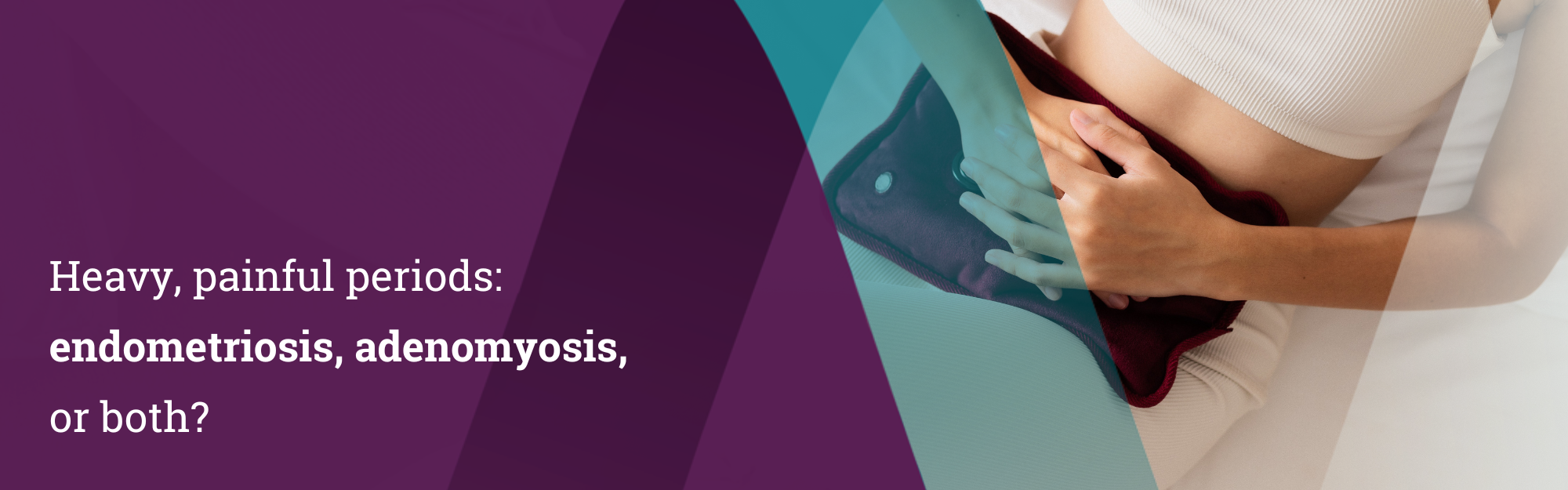
Persistent period pain or heavy bleeding is not something you simply have to live with. If your cycle regularly disrupts your work, relationships or quality of life, it may be a sign of underlying gynaecological conditions such as endometriosis, adenomyosis – or sometimes both.
Mr Glefy Furtado, Consultant Gynaecologist at New Victoria Hospital, explains how these two conditions differ, where they overlap, and how specialist assessment can help you move from uncertainty to a clear diagnosis and a tailored treatment plan.
Your pain deserves better answers
If every month you are planning your life around your period – cancelling social plans, worrying about leaking through clothes, counting pain relief tablets – you should not accept this as simply “bad periods”, even (or especially) if other women in your family have long called these symptoms their “normal” too. Pain during sex, concerns about fertility, disrupted sleep and the need to justify time off work too can take a toll on your confidence, relationships and overall wellbeing.
The good news is that awareness and understanding of period pain have improved significantly. With the right assessment, there are effective ways to manage symptoms and regain control.
What is endometriosis?
Endometriosis occurs when endometrial tissue, similar to the lining of the womb, grows outside the uterus, where it is not meant to be – commonly on the ovaries, fallopian tubes or pelvic lining, and sometimes on the bowel, or bladder, and even beyond the pelvic area.
Like the womb lining, it responds to monthly hormonal changes, thickening and breaking down with each cycle. But because it has no way to leave the body, it can cause inflammation, scarring and adhesions (bands of tissue that can bind organs together). This may lead to ongoing pelvic pain, pain during sex, bowel or bladder symptoms around periods, and fertility difficulties in some women. Symptoms can vary widely, and some may not realise they have endometriosis until later in life, when pain worsens or they experience difficulties with conception.
What is adenomyosis?
Adenomyosis occurs when similar womb-lining tissue grows into the muscular wall of the uterus itself. This can make the womb feel enlarged, softer, or “boggy” upon palpation, and is often linked to very heavy, painful periods.
Women may notice flooding, passing clots, prolonged bleeding or a deep cramping pain centred in the womb. A feeling of pelvic pressure or fullness is also common. Although more frequently diagnosed in women in their 30s and 40s, adenomyosis can affect younger women and may have been present quietly for years before symptoms become obvious. Adenomyosis is also increasingly recognised in implantation difficulties and miscarriage.
Shared symptoms – why they get confused
Endometriosis and adenomyosis share many symptoms, which is why they are often confused. Both can cause:
- Heavy or prolonged periods
- Severe period pain that interferes with daily life
- Pelvic pain that continues outside of menstruation or flares around ovulation
- Pain during sex
- Fertility concerns
Because symptoms alone rarely tell the full story, imaging and specialist assessment are often needed to distinguish between them – or to identify when both are present.
Clues that may point towards one condition
While overlap is common, certain patterns can be helpful.
Endometriosis may be more likely if you experience:
- Pain throughout the cycle, not just during periods.
- Deep pelvic pain or stabbing pains around menstruation.
- Pain with bowel movements or urination.
- Bloating, fatigue or pain spreading to the lower back.
Adenomyosis may be more likely if you notice:
- Very heavy or clotty periods.
- Intense cramping pain focused deep in the womb.
- Pelvic pressure or a sense of heaviness.
- A slightly enlarged or tender lower abdomen.
Symptom | Adenomyosis | Endometriosis |
Painful periods (dysmenorrhoea) | Very common; pain often worsens over time | Very common; pain may start before periods and persist after |
Heavy menstrual bleeding | Very common; often prolonged or flooding | Common, but usually less heavy than adenomyosis |
Blood clots during periods | Common | Less common |
Pelvic pain outside periods | Can occur, but often cyclical | Very common; may be chronic and non-cyclical |
Pain during sex (deep dyspareunia) | Can occur | Common, especially with deep penetration |
Pain with bowel movements | Occasionally | Common, especially during periods |
Pain when passing urine | Less common | More common, particularly if bladder involved |
Bloating / pelvic pressure | Common; uterus may feel enlarged (clinically described as “boggy”) | Common; due to inflammation or adhesions, often described as “endo belly” |
Fatigue | Common, often linked to heavy bleeding | Common, especially with chronic pain |
Fertility difficulties | Possible, but less strongly associated | More strongly associated with infertility |
Irregular bleeding / spotting | Common | Less common |
Enlarged or tender uterus | Typical finding | Not typical |
Symptoms improving after menopause | Often improve significantly | Often improve, but may persist in some |
Who is affected?
Endometriosis is often diagnosed in women of reproductive age and may be associated with early onset painful periods or a family history.
Adenomyosis is more commonly identified in women in their 30s and 40s and in those who have had children or previous womb surgery.
These are patterns, not rules – anyone who has periods can develop either condition, so listening to your symptoms matters, even if you don’t fit a typical profile.
How are these conditions diagnosed?
A private consultation with a specialist Gynaecologist usually includes:
- A detailed discussion about your medical history: your cycles, pain, and how symptoms affect daily life.
- Consideration of a symptom diary to identify patterns.
- A pelvic examination where appropriate.
- Targeted investigations, such as:
- A pelvic ultrasound, often performed transvaginally.
- MRI scan for more detailed assessment.
- Laparoscopy (keyhole surgery) when endometriosis is suspected and treatment may be needed.
Treatment options: what can help?
While there is no single cure available currently, treatment aims to reduce pain and bleeding, protect fertility where relevant, and improve quality of life. Therapy is not one‑size‑fits‑all and is guided by your symptoms, age, future family plans, personal preferences, and which condition – or combination – is present.
Options may include:
- Pain relief and anti-inflammatory medication, such as mefenamic acid.
- For some women, tranexamic acid may help reduce heavy bleeding.
- Hormonal treatments to lighten or suppress periods, such as the combined pill, progestogen‑only pills or injections, and intrauterine systems (coils).
- Heat packs can help to relax the pelvic muscles, and ease cramping.
- Gentle movement when possible and pelvic physiotherapy can provide some relief too.
Keeping track of symptoms can help you recognise triggers, monitor treatment response, and feel more in control. Over time, this can support practical lifestyle strategies, like planning and pacing activities around flare-ups to protect your energy and wellbeing.
When is surgery considered?
Surgery may be recommended when symptoms are severe, persistent, or not responding to medical treatment, and when there is damage to nearby organs.
Endometriosis surgery aims to remove visible disease, cysts or adhesions to restore a more normal pelvic anatomy via laparoscopy. This can reduce pain and, in many cases, improve the chances of conception.
Adenomyosis surgery is considered more selectively and depends on severity, response to treatment, future fertility plans, and may range from more targeted procedures to hysterectomy (removal of the womb). These decisions are made carefully, with time to discuss benefits, risks and alternatives.
When to seek specialist support
“Painful or heavy periods are not something you should feel you have to endure. When symptoms begin to shape how you work, socialise, or plan your life, it’s often a sign that something more is going on. Conditions like endometriosis and adenomyosis can look very similar, but with careful assessment we can usually clarify what’s driving the symptoms and put a plan in place that supports both day-to-day comfort and long-term health.”
Mr Glefy Furtado, FRCOG, DGO, MBBS, Consultant Gynaecologist
It can be hard to know when period pain or heavy bleeding has crossed the line from “unpleasant” to “not normal”. As a starting point, it is sensible to seek specialist advice if:
- Period pain regularly stops you from living your normal life – for example, you miss work, studies or social activities.
- Bleeding is so heavy that you frequently flood through protection, pass large clots or feel light‑headed or faint.
- You have pain during sex, bowel movements or passing urine.
- You have been trying to conceive for 12 months without success (or for 6 months if you are over 35), especially if you also have significant pain.
Because both conditions can affect fertility – particularly endometriosis – early specialist assessment can be especially valuable if you are trying to conceive now or thinking about future family plans. Understanding what is driving your symptoms can help guide timely, appropriate treatment.
Crucially, severe period pain or heavy bleeding is not something you should feel you have to live with. With the right investigation and support, many women find effective symptom relief and are able to regain control over their daily lives and long-term health.
At New Victoria Hospital, our Women’s Health specialists provide care in a calm, supportive setting where women can discuss concerns openly. We focus on clear explanations, appropriate investigations and personalised treatment plans, with continuity of care to ensure findings are considered in the context of your symptoms and priorities.
If you experience any symptoms or are concerned with heavy and painful periods, please request an appointment online with our Consultant Gynaecologists or call 020 8949 9020.
Reviewed by Mr Glefy Furtado, Gynaecology and Urogynaecology Consultant, New Victoria Hospital.
This article is for general information only and does not replace individual medical advice. Please consult a healthcare professional for personalised recommendations.